Habitats Along the Slope
Mountain topography forces air upward, compressing distinct ecosystems into narrow vertical bands where temperature, wind velocity, and fog immersion shift every hundred meters.
The Three Montane Microclimatic Zones
The Premontane Cloud Buffer (900m – 1,500m)
The boundary where convective low-altitude heat begins to mix with cooler mountain breezes. Trees still attain heights of 30 meters, characterized by buttressed roots and broad-leaved lianas, with intermittent fog appearing primarily in late afternoons.
The True Montane Cloud Forest (1,500m – 2,500m)
The perpetual condensation core. Canopy height drops to 15–20 meters. Branches grow crooked and heavily twisted from persistent wind resistance. Epiphyte loading reaches maximum biological saturation.
The Elfin / Dwarf Ridge Forest (2,500m – 3,200m)
Exposed ridge summits where trees shrink to gnarled shrubs under 4 meters high. High winds and thin nutrient-leached soils create dense tangled thickets impenetrable without trails.
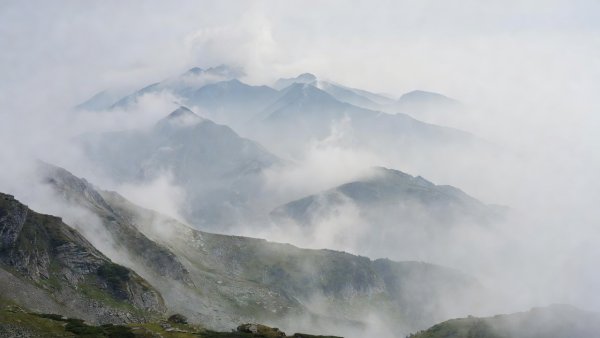
The "Sky Island" Isolation Mechanism
Because high mountain crests are separated by warm, dry valleys, cloud forest species cannot cross the lowlands. Each ridge becomes an evolutionary island, creating hyper-localized speciation and high endemism.
Slope Zone Characteristics
| Zone | Canopy Height | Solar Insolation | Soil Temperature | Primary Stress Factors |
|---|---|---|---|---|
| Premontane | 25 – 35m | Moderate to High | 18°C – 22°C | Deforestation pressure & agricultural runoff |
| Montane Cloud Forest | 12 – 22m | Low (diffuse light) | 12°C – 16°C | High humidity saturation, anaerobic soil spots |
| Elfin Ridge Thicket | 1.5 – 5m | Variable / High UV spikes | 6°C – 11°C | High wind shear, mechanical breaking, frost risk |
Topography & Microclimates FAQ
Trees in elfin forests (often called Bosque Enano) face severe mechanical winds, persistent cloud cover limiting photosynthetic energy, low soil temperatures that inhibit nutrient uptake, and constant leaching of soil minerals by horizontal mist.
During warming trends, valley heat displaces the cool condensation band upward. Species living near summit crests find their cloud cover shrinking with nowhere higher to migrate—a process known as the "escalator to extinction."